Childcare tables and chairs for NZ early learning centres
We speak the language of room layouts, age mixes, and daily centre life. Practical child-sized seating and tables for meals, group work, and flexible spaces — with sizing support and coordinated fitouts when you need them.
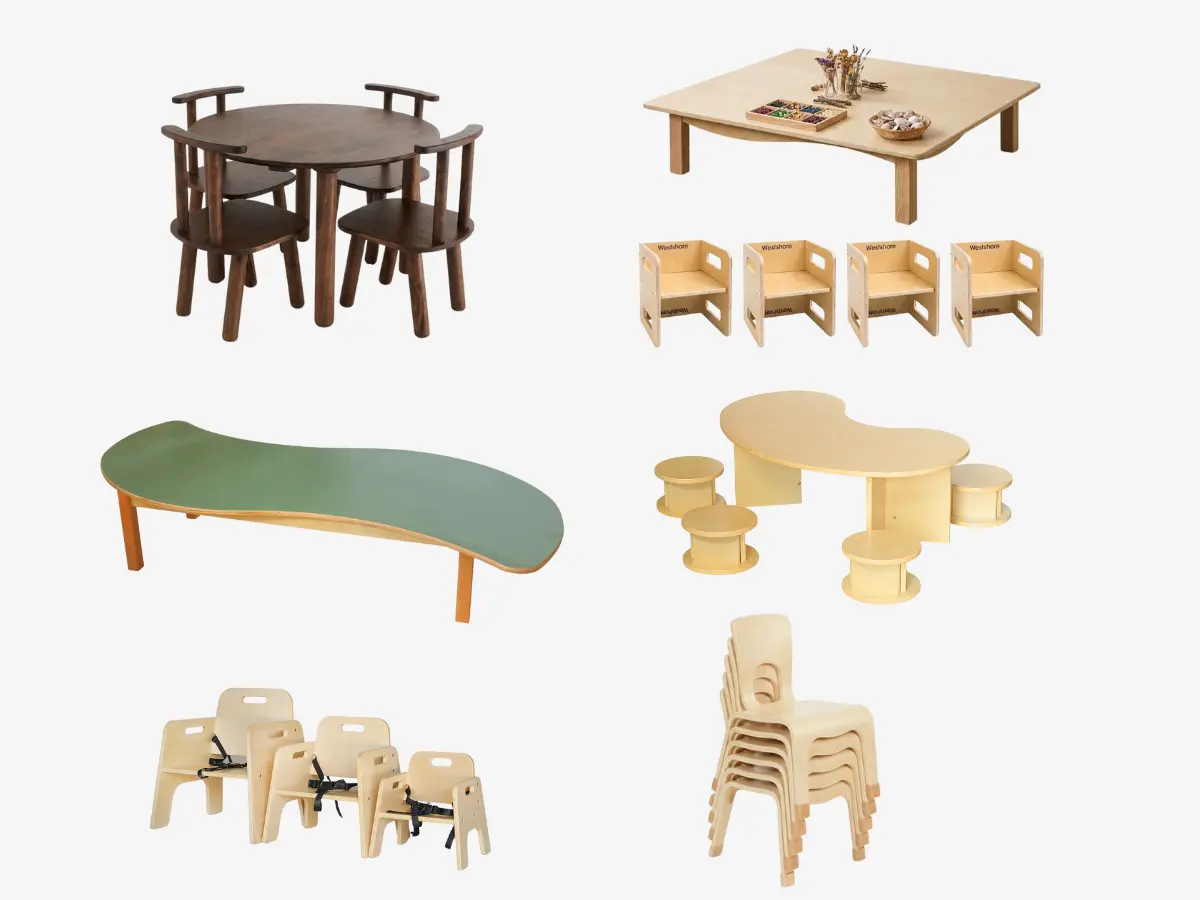
You are not looking for generic school furniture. You need tables and chairs that fit your rooms, your age groups, and the way your team runs the day.
We help centre owners and head teachers across Aotearoa choose practical combinations: shapes that support kai and crafts, heights that suit toddlers through to older preschoolers, and finishes that survive real cleaning routines. When you are planning a new fitout or refreshing one room, we bring catalogue knowledge and layout sense so you do not have to translate everything yourself.
Every piece we supply meets AS/NZS safety expectations for early childhood environments and is selected for durability in busy centres nationwide.

Materials and indoor air
- Board grades and finishes chosen for early childhood environments
- Low-emission panel options on many lines — we confirm details in your quote
- Water-based coatings where specified for the range you select
- Smooth surfaces designed for small hands and daily cleaning routines

Planned for your rooms
- Heights and shapes matched to your age groups and room list
- Custom dimensions and finishes where the line or project allows
- Coordinated colours across spaces so the centre feels intentional
- Quantity and layout guidance so each room gets what it will actually use
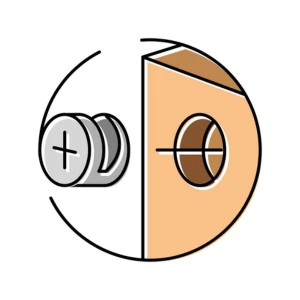
Delivery, assembly, and support
- Clear documentation for items supplied flat-packed or partly assembled
- Practical guidance when your team handles on-site assembly
- Delivery scheduled around your site readiness
- Technical questions answered by people who know the products

Warranty and after-sales
- Written warranty terms supplied with your order, by product line
- Structural coverage explained before you commit
- Spare parts and hardware — ask what is available for your items
- Add-ons and refreshes as your roll or rooms change
Exact warranty duration, material certifications, and scope of design or installation support are confirmed in your written quote and supplier documentation.
Why these products work in early learning rooms
The right mix is not about filling a floor plan with as many units as possible. It is about furniture that respects how tamariki sit, reach, move, and gather — and how your team resets the space between sessions.
Sized for real early learning days
From toddler proportions through to preschool groups, we think in seat height, reach, and how tamariki move around furniture — not just catalogue codes.
Built for cleaning and turnover
Surfaces and finishes are chosen for wipe-down routines, busy meal sittings, and paint-heavy tables without turning your room into a maintenance project.
Layouts that match how you teach
Whether you run collaborative tables, quiet bays, or flexible shapes that change each term, we help you match tops, chairs, and traffic flow to your pedagogy.
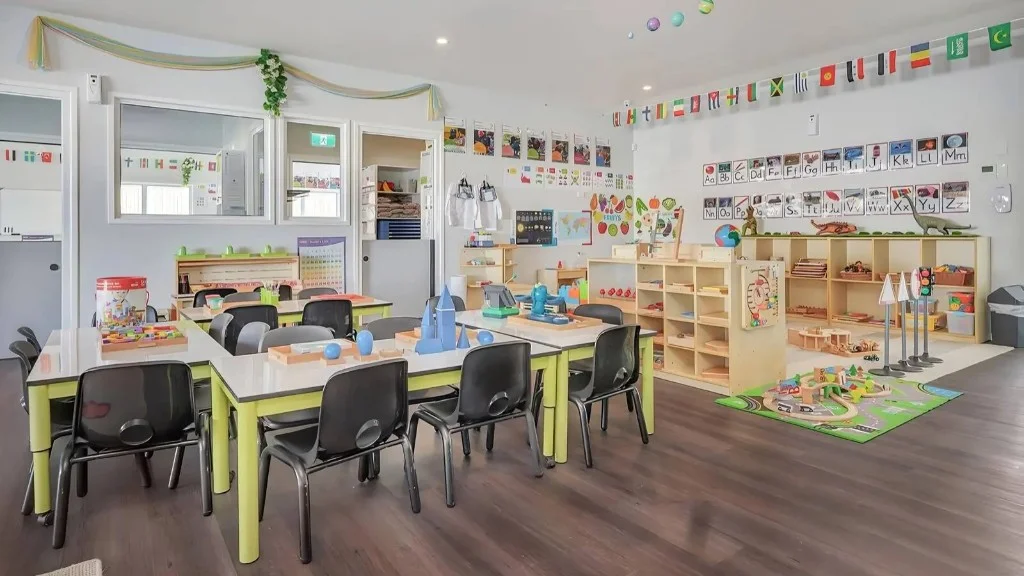
Heights, ages, and room layout
Mixed-age licensing and open-plan rooms mean height is never only about a single age band. We start from your roll, typical group sizes, and how each space is used — meals versus art versus quiet work — then narrow to seat heights and table heights that keep children stable and comfortable.
For toddlers, we look at low tables and chairs that allow independent sit-to-stand. For older preschoolers, slightly higher sets prepare children for school-style seating while still fitting early childhood proportions. Where infants and young toddlers share a dining area, we often plan separate high-chair or low-table zones alongside preschool-height furniture.
Exact dimensions depend on your programme and furniture lines. Share a floor plan or rough room list and we will suggest combinations that work together — including how many of each height to order so you are not short in one room and overstocked in another.
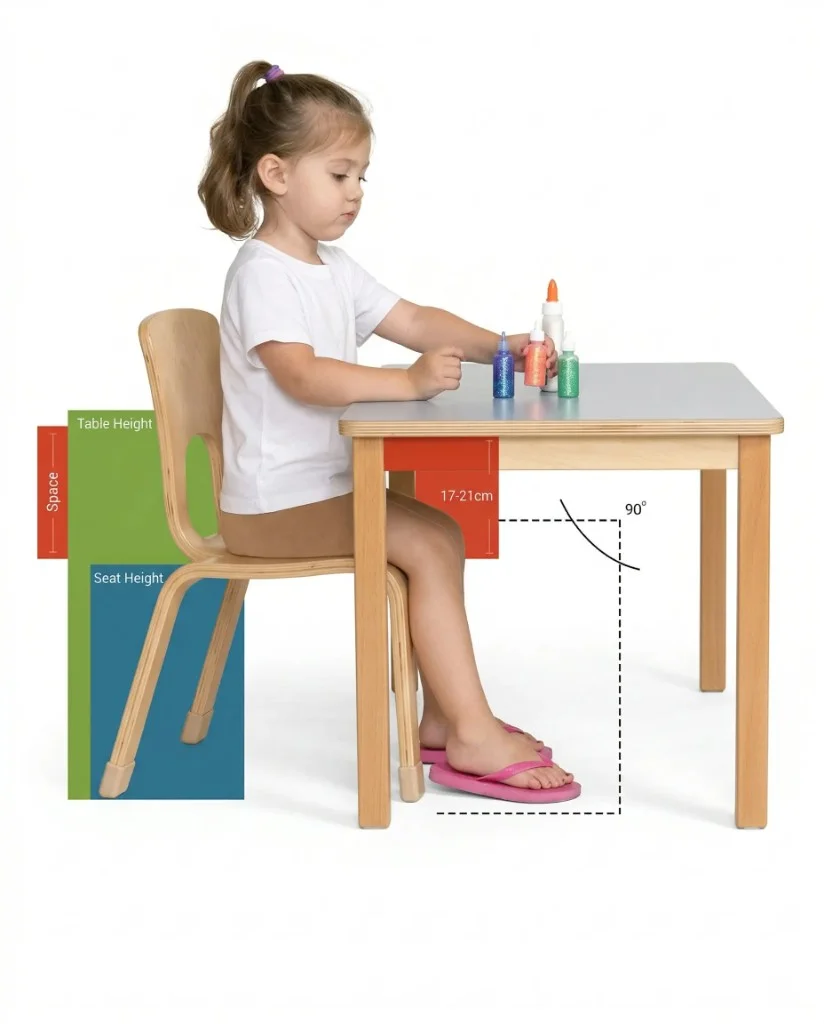
Table and chair height reference
Switch age band to see indicative table-top and seat heights in centimetres. These are planning aids only — your roll, furniture line, and room layout may call for something different.
For an interactive selector, the full EN 1729 ladder in one table, and three setup checks, use our dedicated childcare furniture size guide.
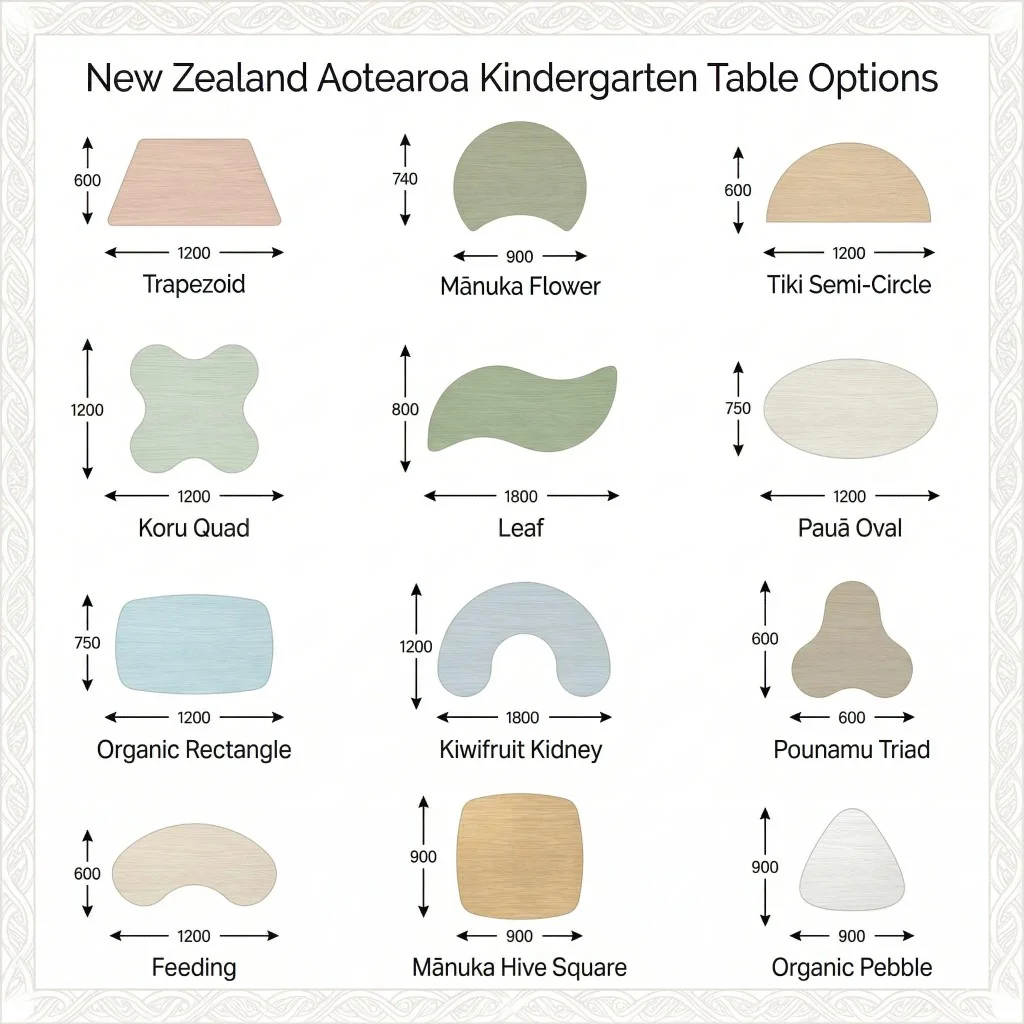
Tabletop shapes and flexible configurations
Round and flower tables support equal participation and clear sight lines — ideal when the educator sits with the group. Square tables define small territories for focused play. Rectangles line walls, form long workshop surfaces, or split for independent work.
Trapezoidal tops tessellate into hexagons or gentle arcs so you can change group size without buying new furniture each time. White circular and trapezoidal options suit bright, documentation-rich rooms where you want a calm, gallery-like backdrop.
Finishes, timber, white options, and custom work
Laminate, birch ply, and painted finishes each have a place: some centres prioritise warmth and natural grain; others need high-contrast, easy-to-sanitise surfaces in meal areas. We help you choose combinations that look coherent across the building and hold up to your cleaning products and schedules.
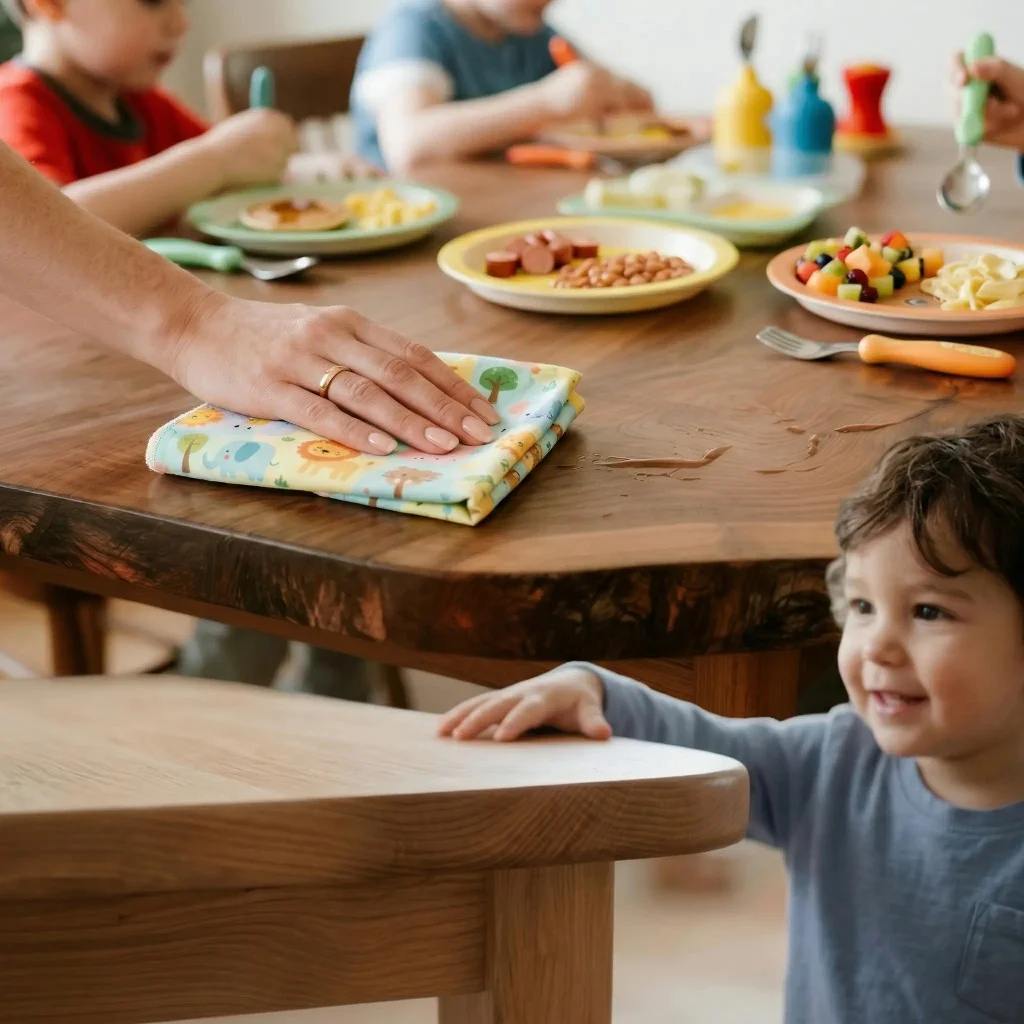
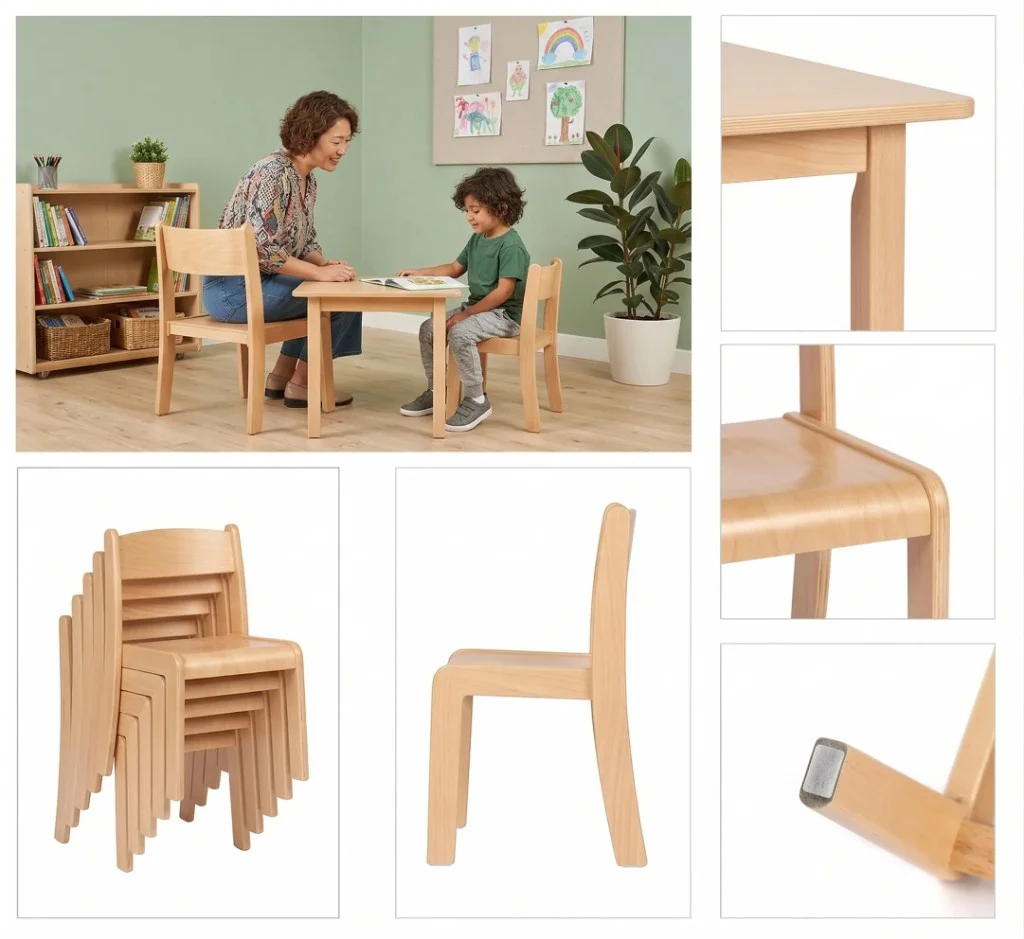
Need non-standard sizes, linking hardware, or a finish to match an existing fitout? We support custom and semi-custom work alongside standard lines. Custom Projects is the best place to start for bespoke briefs.
Typical classroom use cases
Meals and kai
Stable seating, appropriate heights, and table shapes that suit serving lines and family-style dining.
Group work and mat-linked activities
Round, flower, and progression tables that keep every child included and reduce crowding at the centre.
Art, collage, and messy play
Rectangle and trapezoidal runs that give you long work surfaces and simple reconfiguration after sessions.
Quiet focus and small groups
Square and smaller footprints for puzzles, literacy, and one-to-one moments without dominating the floor plate.
Representative tables and chairs
Below is a curated mix of the kinds of lines centres ask for most often — not an exhaustive catalogue. When you enquire, tell us your room list, age groups, and style direction; we will refine quantities, heights, and finishes with you.
Round Table
Circular tops keep every child within easy reach of the centre, ideal for group games, shared kai, and collaborative work. We match diameter and base style to your room so sight lines stay open and movement stays safe.
- Even seating for small groups
- Central or multi-leg options
- Sized for your layout, not a one-size default
Square Table
Compact footprints suit corner nooks, puzzle tables, and spaces where you want clear boundaries between activities. Square tops pair neatly when you need to scale up for projects.
- Efficient against walls and in bays
- Easy to combine for larger surfaces
- Stable bases for active daily use
Rectangle Table
Straight edges make it simple to line tables along walls, join them for long workshop runs, or split them for quieter work. The elongated surface suits art and construction, nature-based provocations, and teacher-led groups where everyone needs clear elbow room without crowding the centre. A practical backbone for busy early learning rooms.
- Flexible rows, bays, and clusters as your timetable changes
- Hard-wearing tops for daily wipe-down
- Pairs with coordinated seating across age bands
White Circular Table
Light, neutral tops suit bright, modern interiors and help resources and documentation stand out. Timber legs keep warmth in the room so the space does not read as clinical. The same inclusive circular layout as a standard round table, with finishes that suit contemporary fit-outs and high-visibility learning walls.
- Clean surface for documentation and small-group work
- Durable laminate or painted top options
- Coordinates with natural timber or coloured seating
White Trapezoidal Table
Trapezoidal tops tessellate into hexagons, arcs, or a ring so you can reshape the room without a full furniture shuffle. White surfaces keep provocations and documentation visible, while timber legs tie in with natural material programmes. Popular when you want flexible group sizes and a fresh layout between terms.
- Combine for hex, wave, or circular groupings
- Collaborative and independent work side by side
- Finish options to match your palette
Flower and Progression Table
Flower-shaped tops give each child a clear place at the table while keeping the centre open for materials and kai. Progression bases add height adjustment so you can tune tables to your age mix or refresh a room as groups change. We help you pair lines with coordinated progression seating when younger tamariki need extra support, using rounded profiles and stable timber construction built for daily centre life.
- Height-adjustable progression bases for growing groups
- Lobed tops suited to small-group teaching and shared meals
- Matching progression-style seating where your programme needs it
Classic Chairs
Time-tested profiles centres recognise: stable feet, smooth edges, and seat heights that let tamariki sit with feet supported for their age band. Many lines pair an easy-clean molded shell with light timber legs so rooms stay warm visually while routines stay practical. Carry points and floor-friendly glides help staff reset layouts between sessions without marking boards.
- Seat heights coordinated with your table mix
- Easy-clean shells with natural timber leg finishes available
- Stable stance, rounded profiles, and colours that suit a full fitout
Stackable Chair
Uniform stack heights make pack-down, events, and deep cleaning faster. Solid timber profiles nest with a steady pitch so stacks stay predictable in the cupboard or corridor, while staying light enough for staff to reset a room between sessions. Back cutouts work as carry points, and multiple seat heights are available so each age group sits with hips, knees, and feet in a comfortable position.
- Predictable nesting for storage, events, and floor resets
- Carry cutouts and rounded edges for daily handling
- Natural timber finishes and palette options on selected lines
Bentwood Chair
Curved backs and continuous bentwood-style lines suit reception corners, studio tables, and dining bays where you want warmth without a utilitarian look. Smooth edges feel comfortable for longer seated stretches, and many lines nest into tidy stacks when you need the floor for movement or events. A discreet back cutout supports controlled lifts, with dimensions and non-toxic finishes specified for early learning use and commercial cleaning routines.
- Curved profile suited to welcoming and studio spaces
- Stacks for storage when the floor needs to open up
- Natural timber aesthetic alongside laminate or white tables
Toddler Chair
Lower seat heights and wide, stable footprints suit younger tamariki so they can sit and stand with confidence—not a scaled-down primary-school chair. Curved ply profiles with rounded corners keep edges soft for busy rooms, while back cutouts help educators reposition sets quickly. Specify alongside matching low tables for kai, stories, and sensory invitations.
- Proportioned for toddler rooms rather than school-age sizing
- Stable stance and smooth ply edges for active daily use
- Coordinated low tables and carry details on selected lines
Natural and Round Wooden Chairs
Round-profile timber seating—stools and low chairs—with the warm look of natural ply and layered edges. Proportions suit toddler and preschool tables, including low organic tops, while staying cohesive with open shelving and calm neutral palettes. Durable coatings handle high-touch daily use; pair with white or laminate tables when your programme wants crisp contrast.
- Round tops and sturdy posts for low table groupings
- Natural timber aesthetic for nature-based and Reggio-inspired rooms
- Coordinated table and seat heights available across the line
Easy-Clean Poly Chair
Non-porous shells, legs, and modular cube seating stand up to paint, dough, and frequent sanitiser routines without the upkeep raw timber demands in the messiest zones. Wood-look and solid colour finishes keep rooms warm while surfaces stay quick to wipe. Specify for kai tables, creative studios, activity bays with tuck-under cubes, and anywhere pack-up between groups needs to stay fast.
- Wipe-clean poly and laminate options, including shell and cube forms
- Finishes that coordinate with laminate, painted, or timber-look tables
- Light enough for staff to reset layouts after messy sessions
Frequently asked questions
What table and chair heights do you recommend for each age group?
There is no single chart that fits every centre, because room layout, licensing, and your age mix all matter. As a guide, younger groups need lower seats so feet rest on the floor with hips and knees at comfortable angles. Older preschoolers use slightly higher sets. In mixed-age rooms we often specify two seat heights in the same space. Tell us your groups and room sizes and we will recommend practical combinations.
Can I order mixed sizes for different rooms?
Yes. Most centres need different heights and table shapes in infants, toddlers, and preschool areas. We plan quantities and finishes per room so delivery and installation stay straightforward.
Do you offer matching table and chair sets?
Yes. We can coordinate tops, leg finishes, and chair colours so dining, activity, and studio areas feel intentional rather than assembled from mismatched lines.
Can you customise shapes, finishes, or sizes?
Yes. Beyond standard lines we support custom dimensions, edge details, and finishes where your programme or architecture needs it. If your brief is unusual, start with our Custom Projects page or mention it in your enquiry.
Do you supply across New Zealand?
Yes. We supply and deliver nationwide across Aotearoa and coordinate logistics so furniture arrives when your site is ready.
Tell us about your tables and chairs
Share your centre layout, age mix, and timeline. We will respond with practical options, indicative combinations, and clear next steps for a quote or fitout conversation — no obligation.